

Welcome to CMDS 2022
CMDS 2022 brings together scientists working in different research areas and serves as a venue for exchanging ideas between theorists and experimentalists. Topics discussed at CMDS include development and implementation of multidimensional visible, infrared, and THz spectroscopy, as well as applications of these techniques to addressing problems in, chemistry, biology, and materials science.
CMDS 2022 is the tenth conference of a series started in 2002 and follows the meetings held in Seoul (Korea), Madison (USA), Rigi-Kulm (Switzerland), Kyoto (Japan), Minneapolis (USA), Berlin (Germany), Eugene (USA), Groningen (Netherlands), and Seoul (Korea) .
ABSTRACT SUMISSION
Abstract Submission is now open
The abstract submission deadline is March 31, 2022.
Abstract format: One page including references and Figures. Please name your abstract file: presenter “Lastname_Firstname.pdf or .docx” Abstract template can be downloaded here.
REGISTRATION
Early registration (before May 16)
Professional (5+ years after PhD) - $350
Early Career (Student/Postdoc) - $250
Virtual Participation Only - $50
Optional: Printed abstract book +$30
Late registration (after May 16)
Professional (5+ years after PhD) - $450
Early Career (Student/Postdoc) - $350
Virtual Participation Only - $50
Registration portal will open: February 15
VENUE AND PRESENTATION FORMAT
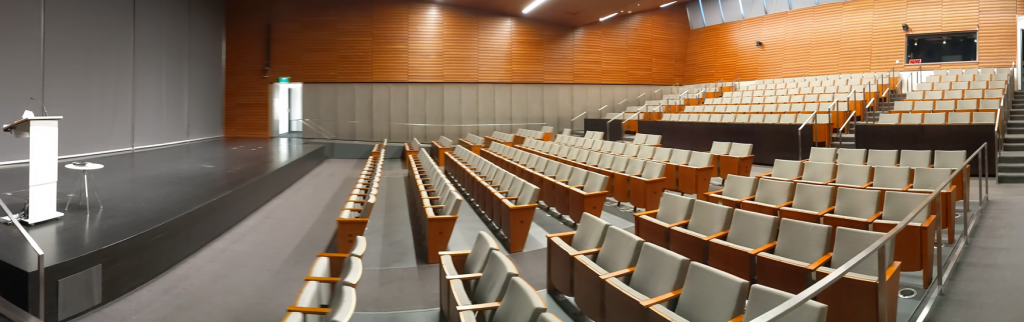
The 2022 Conference will take place in Austin, Texas on the campus of the University of Texas at Austin. Oral presentations will be in person with option for remote viewing via Zoom and YouTube live. Poster sessions will be hybrid, consisting of both in person and virtual presentations.
Jessica Anna, University of Pennsylvania, USA
Geoffrey Blake, Caltech, USA
Jens Bredenbeck, University of Frankfurt, Germany
Minhaeng Cho, Korea University, Korea
Elisabetta Collini, University of Padova, Italy
Steven Cundiff, University of Michigan, USA
Greg Engel, University of Chicago, USA
Michael Fayer, Stanford University, USA
Sean Garrett-Roe, University of Pittsburgh, USA
Nien-Hui Ge, University of California Irvine, USA
Peter Hamm, University of Zurich, Switzerland
Neil Hunt, University of York, UK
Thomas L.C. Jansen, University of Groningen, Netherlands
Patanjali Kambhampati, McGill University, Canada
Kevin Kubarych, University of Michigan, USA
Bern Kohler, Ohio State University, USA
Amber Krummel, Colorado State University, USA
Henrike Müller-Werkmeister, University of Potsdam, Germany
Jennifer Ogilvie, University of Michigan, USA
Tom Oliver, University of Bristol, UK
Poul Petersen, Ruhr-Universität Bochum, Germany
Gabriela Schlau-Cohen, Massachusetts Institute of Technology, USA
Tahei Tahara, RIKEN, Japan
Andrei Tokmakoff, University of Chicago, USA
Lu Wang, Rutgers University, USA
Wei Xiong, University of California San Diego, USA
Martin Zanni, University of Wisconsin, USA
Keynote Talk: Molecular Vibrational Polaritons for Chemistry and Quantum Technology
Prof. Wei Xiong (University of California, San Diego)
Molecular vibrational polaritons are hybrid half-light, half-matter quasiparticle under vibrational strong coupling. These hybrid quasiparticles not only inherit properties of both photons and matter, but also processes unique new photonic and molecular phenomena, including tilting chemical potential landscapes of reactions, adding new energy transfer pathways and strong photonic interactions. Many of these developments hinge on the fundamental understanding of the physical properties of molecular vibrational polaritons. Pump-probe and 2D IR spectroscopy provide unique insights to this emerging research area by resolving the dynamics of various states. In this talk, I will first cover the concept of vibrational strong coupling and the current understanding of polaritonic 2D IR spectra. Then I will discuss how polariton could influence inter and intramolecular interactions, including energy transfer between molecules and barrier crossing events. Lastly, I will show some exciting opportunities of using vibrational polaritons as quantum bits for quantum information technology, including coherent transfer among polaritons and confinement effects in polaritons, visualized by 2D IR imaging technique.
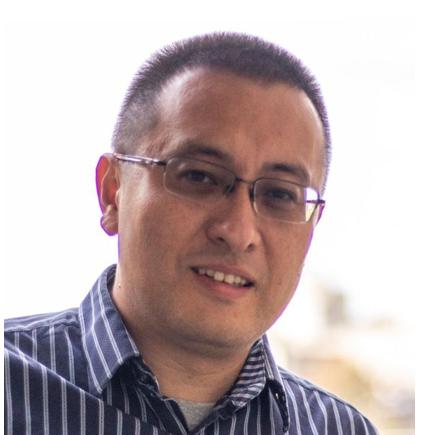
Professor Wei Xiong is an Associate Professor in the Department of Chemistry and Biochemistry at the University of California, San Diego. Wei received his B.S. degree from Peking University, China, in 2006. He then joined Prof. Martin Zanni’s group at the University of Wisconsin, Madison, and completed his Ph.D. degree in 2011. At Madison, Wei focused on developing novel 2D vibrational spectroscopy (transient 2D IR and heterodyne 2D SFG spectroscopy) to study molecules on solid-state material surfaces. Wei then moved to the University of Colorado, Boulder, in 2011, where he worked with Prof. Margaret Murnane and Henry Kapteyn to develop the table-top XUV source for ultrafast measurements and time-resolved photoelectron spectroscopy for nanoparticles. He joined the faculty at the University of California San Diego in 2014. At UCSD, Wei’s group focuses on using and developing ultrafast nonlinear spectroscopic and imaging tools to reveal molecular structures and dynamics of materials, including ultrafast dynamics of polaritonic systems, guest molecule adsorptions on porous materials, femtosecond charge transfer dynamics on organic material interfaces.
CONFERENCE SCHEDULE
| Date | Monday, June 20 | Tuesday, June 21 | Wednesday, June 22 | Thursday, June 23 | Friday, June 24 |
| 8:00 AM | Early Career Symposium | Introductory Remarks | Session 4 | Session 6 | Session 8 |
| Session 1 | |||||
| 10:00 AM | Break | Break | Break | Break | Break |
| Session 2 | Session 5 | Session 7 | Session 9 | ||
| 12:00 PM | Lunch | Conference Photo | Lunch | Lunch | Lunch |
| Lunch | |||||
| Keynote Presentation | |||||
| 3:00 PM | Break | Break | Break | Closing Remarks | |
| 3:30 PM | Session 3 | In-Person Poster Session | Virtual Poster Session | Free Time | |
| 5:30 PM | Welcome/Reception | end | end | end | Conference Outing |
| Speakers Dinner | |||||

⬤ January 10, 2022
Abstract Submission Opens

⬤ March 31, 2022
Abstract Deadline

⬤ April 29, 2022
Abstract Notification

⬤ May 16, 2022
Early Registration Deadline

⬤ May 30, 2022
Registration Closes

⬤ June 21, 2022
Conference Starts
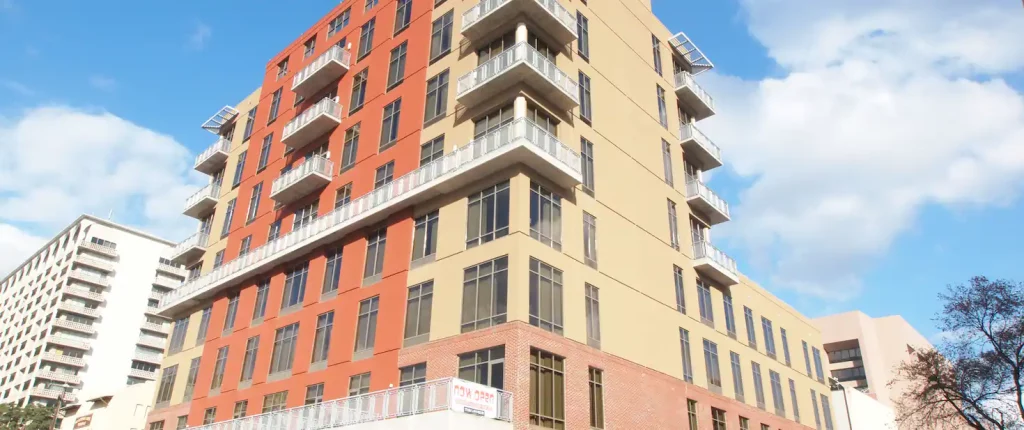
Moxy Austin (10 min walk)

2552 Guadalupe St
Austin, TX
Hotel Ella (13 min walk)

1900 Rio Grande St
Austin, TX
The Otis Hotel (12 min walk)

1901 San Antonio St
Austin, TX
AC Hotel Campus District (12 min walk)

1901 San Antonio St
Austin, TX







Interested in sponsoring the meeting?
Please contact the organizers for details.
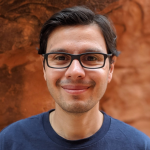
Associate Professor
Department of Chemistry
University of Texas at Austin
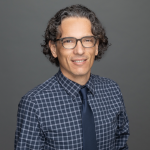
Associate Professor
Department of Chemistry
University of Texas at Austin
Minhaeng Cho, Korea University
Thomas Elsaesser, Max-Born-Institute, Berlin
Peter Hamm, University of Zurich
Thomas L.C. Jansen, University of Groningen
David Jonas, University of Colorado, Boulder
Munira Khalil, University of Washington, Seattle
R. J. Dwayne Miller, University of Toronto and CFEL, Hamburg
Shaul Mukamel, University of California, Irvine
Yoshitaka Tanimura, Kyoto University
Andrei Tokmakoff, University of Chicago
Keisuke Tominaga, Kobe University
John Wright (Chair), University of Wisconsin, Madison
Martin Zanni, University of Wisconsin, Madison
Local Organizing Committee:
Jessica Anna, University of Pennsylvania
Doran Bennett, Southern Methodist University
Daniel Kuroda, Louisiana State University
Elaine Li, University of Texas at Austin
Lauren Webb, University of Texas at Austin

For general inquiries please contact the organizers:
Carlos Baiz - [email protected]
Sean Roberts - [email protected]